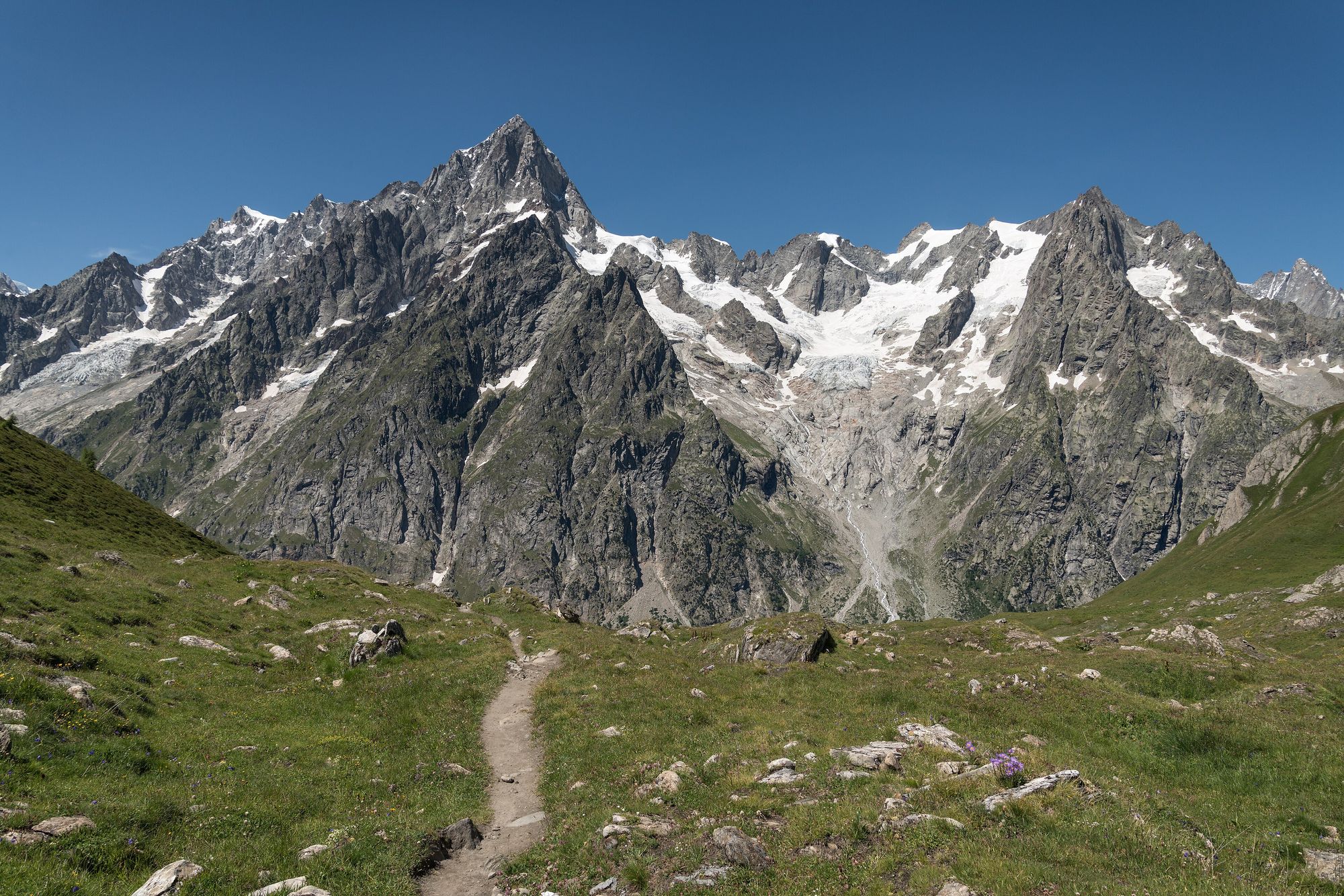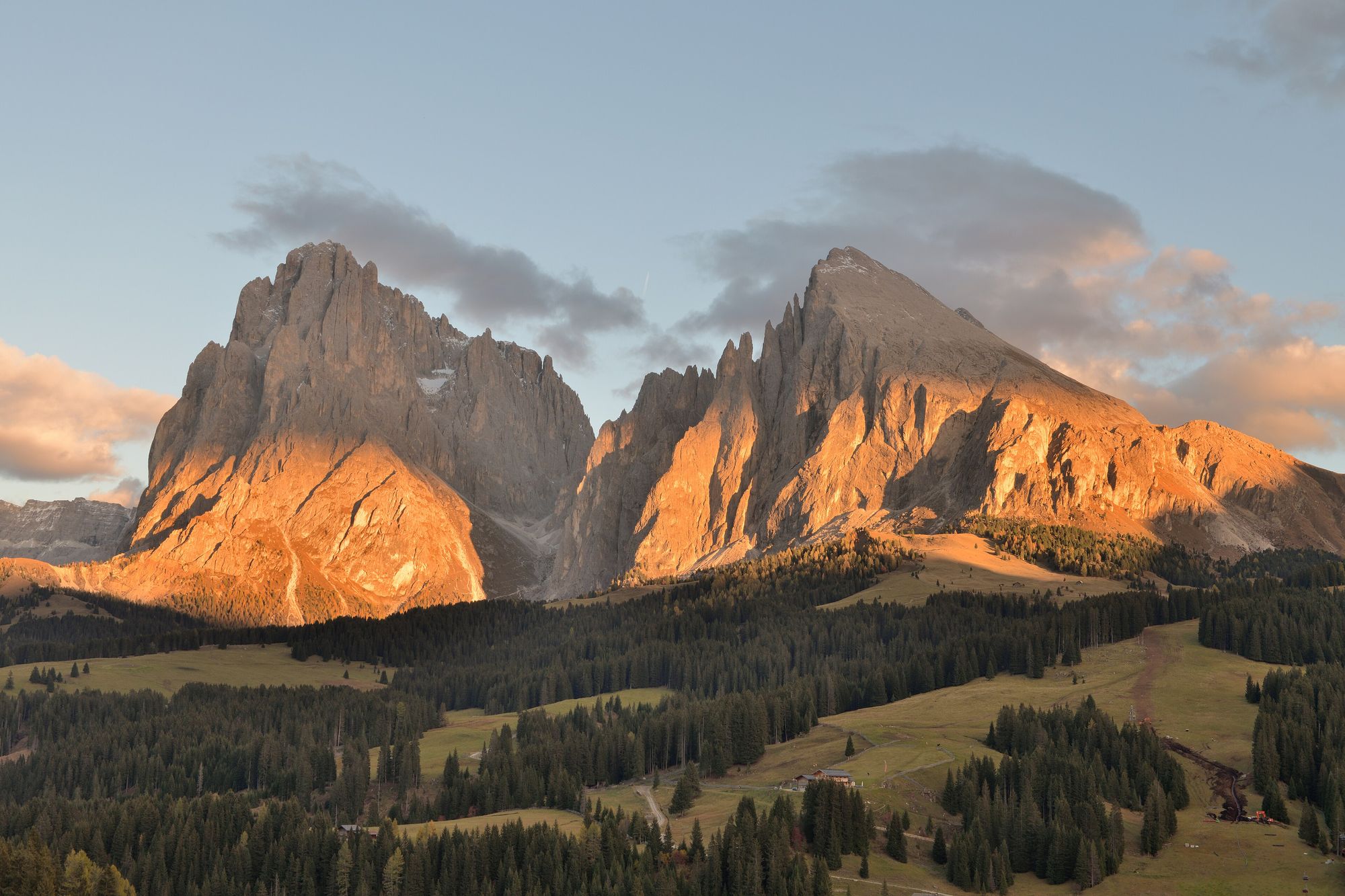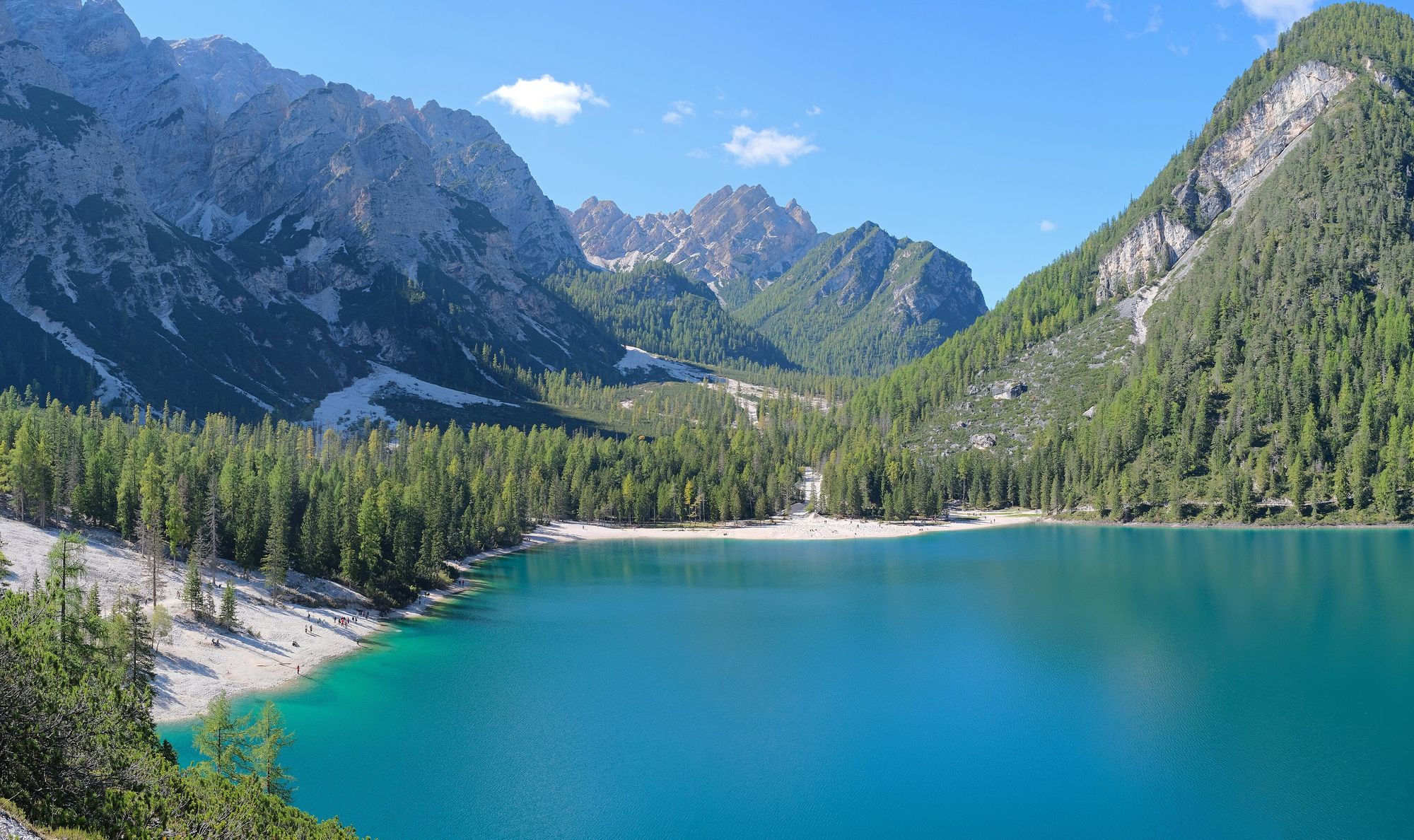
Four routes · July 2028 · Twenty-one of us
We all turn fifty in 2028. Here is what three or four days of walking hut to hut could actually look like — the real distances, the real climbs, what it costs, and which one an eight-year-old will thank us for.
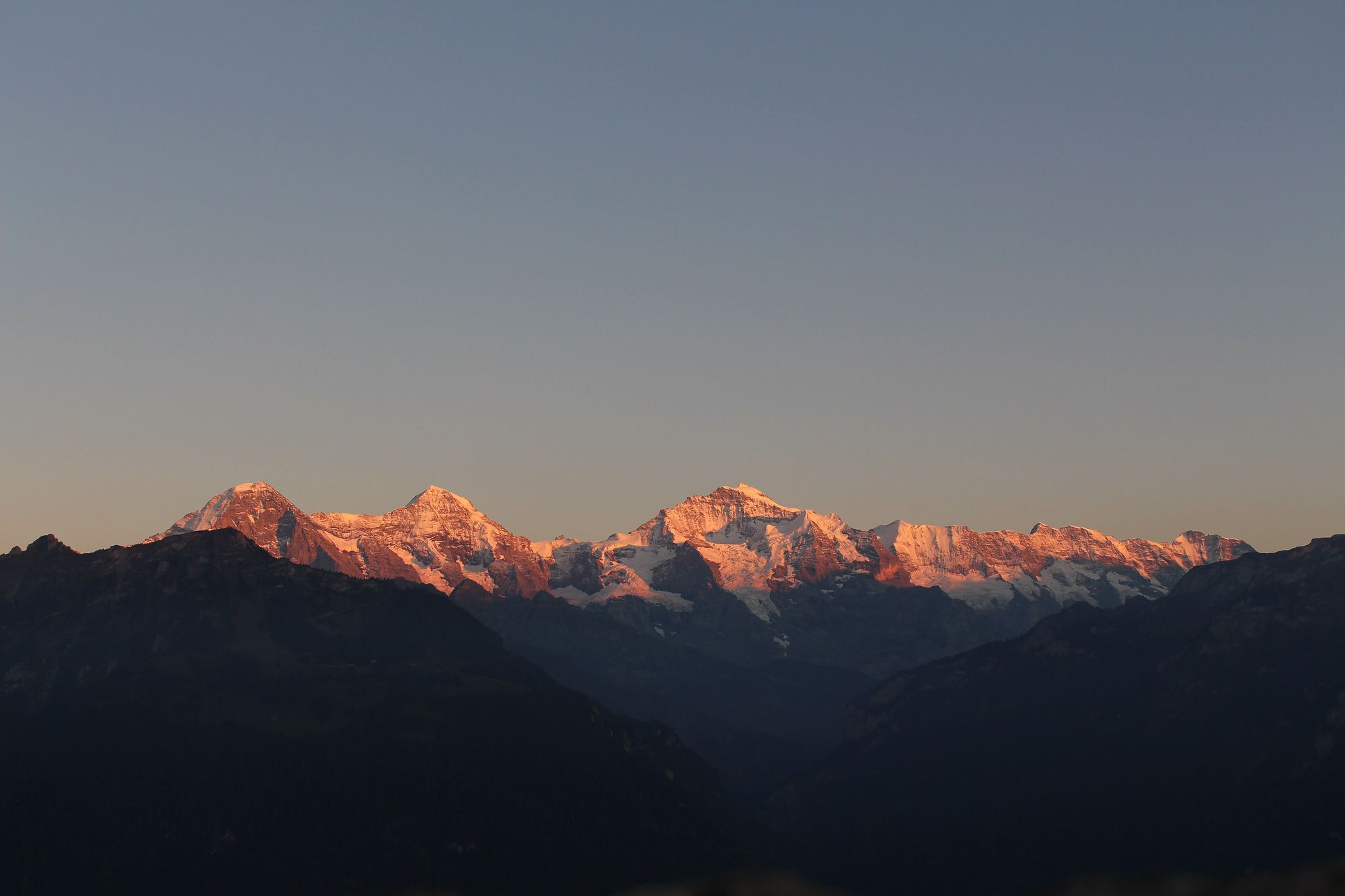
The idea, in one line: walk between mountain huts for three or four days, with the families, somewhere none of us will forget.
Everything here is a real route that real families walk. I have kept the numbers honest — where a day is long, it says so, and where a child would struggle, it says that too. Nothing here is a package you have to buy; these are itineraries we would book ourselves.
The four are deliberately different from one another. One is dramatic and demanding. One is comfortable and has a train or a cable car on every single day. One is the most famous trek in the Alps. One is gentle enough that nobody has to be brave. Open each one, look at the photographs, then read the honest part before you fall in love.
Open any of them for the day-by-day, the elevation profiles, the photographs and the honest assessment.
Route 1
Four days along the top of the Dolomites, sleeping in rifugi perched where there is no road.
Route 2
Village to village under the most famous skyline in the Alps, with one night high on a summit for the sunrise.
Route 3
The best-known trek in the Alps, and you would be walking its finest section — over two high passes and across a border on foot, from French mountain refuges to an Italian valley where dinner is a completely different proposition.
Route 4
The same mountains as Alta Via 1, walked a completely different way: across Europe's largest high alpine meadow, with cable cars everywhere, hotels with swimming pools, and arguably the best food in the Alps.
The axes that will actually decide this — not the scenery, which is spectacular on all four.
| Route | Country | Distance | Ascent | For the 8-year-old | Comfort | Bail-outs | Cost |
|---|---|---|---|---|---|---|---|
| Alta Via 1The dramatic one | Italy | 35 km | 2,620 m | One genuinely long day | One rustic hut, two good ones | Two real escape points | $$ |
| Berner OberlandThe comfortable one | Switzerland | 36 km | 1,050 m | Short days, lifts do the climbing | Hotels, plus one old summit inn | A train or lift every single day | $$$$ |
| Tour du Mont BlancThe famous one | France → Italy | 48.6 km | 2,952 m | One very long day for small legs | Refuges, mostly dormitories | Shuttle buses on two days | $$ |
| Alpe di SiusiThe easy one | Italy | 36 km | 1,680 m | Five-hour days on easy ground | Spa hotels and good mountain inns | Lifts on every side of the plateau | $$$ |
Per family of four, for the walking days only — beds, dinners and breakfasts, lifts and transfers. Estimates in today's money.
€1,400–2,000
Rifugio half board runs roughly €75–95 per person in a dormitory, €110–140 for a private room. Cash matters up there.
CHF 3,000–4,500
The Faulhorn is cheap — about CHF 80–115 per person with dinner and breakfast. It is the three village-hotel nights and the train and lift tickets that make this the expensive option.
€1,200–1,700
The cheapest, because refuge half board is €65–80 per person and there are no lift tickets to buy.
€1,900–2,700
Half board in a three or four star Val Gardena hotel, plus the cable car passes that make the days easy.
Flights are on top and are the same wherever we go — reckon on $900–1,400 per person from the US in July, booked early. None of these figures include the extra days either side, which is where the real variation sits.
Mountain huts are not hotels. The good ones open their books about a year ahead and fill within days.
Comments on a particular route live on that route's page. This one is for everything else.
What I actually need to know, and I would rather hear it now than in 2028:
Questions, constraints, dates, a route none of these covers — anything at all.